

Economic Perspective 23 October 2026
The Latest Trending Economic News Curated for You by Balmoral Group Australia
Good morning, welcome to our latest updates and environmental economics insights.
This week’s stories cover three parts of the climate response: cutting emissions, paying for it, and living with warming already under way. UNEP’s latest Emissions Gap Report confirms the world will overshoot 1.5°C. National pledges would cut emissions by 11–15% by 2035, shy of the 45% needed to keep the overshoot low. Carbon markets are being increasingly used to fund carbon-storing projects, such as Panama’s new decree aligning with international voluntary markets under the Paris Agreement.
In Australia, costs are already visible, and new modelling has found Australia’s fire seasons are 21% longer than in 1979 and will cost about $6 billion a year over the next three decades. Better protection of homes and infrastructure could avoid $600 million in losses each year, and the Heat Smart City Plan for Greater Sydney shows how preparation could be delivered in the face of a strong El Niño summer approaching. I've also attached an image of BGA's fire-risk GIS analysis conducted as part of recent work.
If you’d like to view previous editions of the BGA Economic Perspective, please click here and navigate to the News tab, or to subscribe, please click here.
Happy reading and have a lovely weekend.

Supercharged fire seasons cost Australia $6b annually as El Niño summer looms
New modelling commissioned by Emergency Leaders for Climate Action (ELCA) has found that Australian fire seasons have lengthened by 21% since 1979 due to rising global temperatures, exposing 5.6 million households to bushfire risk. Extended seasons will cost Australia $6 billion a year, largely due to harm to health and wellbeing, followed by lost business output, damaged schools, workplaces and homes, and lost work. Major events, such as the Black Summer fires, can cost almost $30 billion, and between 2003 and 2020 more than a million Australians lived in a home within one kilometre of an active fire front. These estimates demonstrate the value of reliable economic modelling. Read more here.
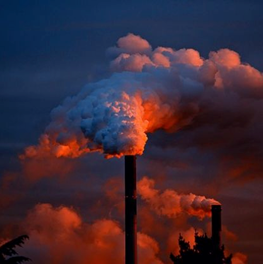
Special Report: The 1.5°C Window Has Closed. The Choices That Shape What Comes Next Have Not
Exceeding 1.5°C of global temperature rise is now unavoidable, according to the UNEP's 2026 Emission Gap Report. However, how far warming peaks above 1.5°C and how long it stays there, can vary. Global emissions reached about 58.4 GtCO₂e in 2025, with no clear evidence that they have peaked. The newest national pledges from 124 countries (76% of global GHG emissions) will cut emissions by 11-15% below 2025 levels by 2035 if fully implemented, however, the lowest-overshoot pathway needs 45%. Current policies point to roughly 2.8°C of warming by 2100. Ahead of COP31, UNEP is urging governments to turn their pledges into implemented policies, investment and measurable milestones. Read more here.

We must prepare entire cities for extreme heat. Our new study reveals how
With a strong El Niño threatening a scorching Australian summer, researchers from Western Sydney University and UNSW studied how Greater Sydney is getting ready. The Greater Sydney Heat Taskforce brought together 373 representatives from more than 40 organisations. They developed the Heat Smart City Plan, which sets out 40 recommendations for 2025-2030. The study found that success depended on three things: breaking down silos between health, council and planning bodies, involving community groups, and naming a lead organisation for each action. The authors warn that lasting change will need long-term funding and coordination across housing, health, infrastructure and emergency services. Read more here.

Panama Opens New Chapter in Carbon Markets, Positioning Its Natural Resources for Global Climate Investment
Panama issued Executive Decree No. 6 on 15 October, replacing the rules for its National Carbon Market System, aligning current systems with the Paris Agreement, specifically article 6 which enables countries to cooperate through international transferred emissions reductions. It gives the Ministry of Environment power to authorise international transfers of globally recognised carbon credits and access voluntary markets such as CORSIA, the aviation sector’s offsetting scheme. CORSIA-eligible credits trade at about US$15-22 per tonne, compared with US$1-14 for most other credits. Success now depends on developing credible projects and attracting buyers. Read more here.
Severity Predictions for 1-in-50-years bushfire events in
Jervis Bay Territory
BGA mapped fire intensity in the Jervis Bay Territory (JBT). This map was made using CSIRO's Fireline Intensity (FLI) data, which shows the predicted heat or energy of 1-in-50-years bushfire events, measured in kW/m. Yellow areas are hotter, and the data shows FLI reaching 48,219 kW/m on average and surpassing 100,000 kW/m along the southeast coastline, which is roughly 12 times the upper limit for direct suppression by firefighters (~3,000-4,000 kW/m). Visit our website here more examples of our GIS and economic analysis.

Connect with Balmoral Group Australia Here


Comments