

Economic Perspective 04 September 2026
The Latest Trending Economic News Curated for You by Balmoral Group Australia
Hello Dear Readers,
Productivity and inflation have been top of mind; what's their relationship? Discussion from Michelle Grattan and the Productivity Commission reveal that the productivity slump, which is reining in growth by increasing the sensitivity of inflationary pressures to demand, may be caused by red-tape in the business environment rather than the "non-market" sectors. Hopefully, low carbon industry and electrification can ramp up investment.
To this end, the government have funded $32.6 million in carbon capture technologies for application in agriculture, steelmaking, concrete manufacture, and lithium refinement. The DCCEEW has also opened consultation on implementing the recently ratified High Seas Biodiversity Treaty and updated the EEA Dashboard, a useful tool for analyzing environmental data. I have also attached a map I recently made replicating the ABS' methodology for identifying protective coastal habitat to demonstrate how experimental methodologies can be used in new environmental assessment processes.
Please feel free to forward this to anyone you think would be interested. If you’d like to view previous editions, please click here and navigate the News tab, or to subscribe, please click here!
Happy reading and have a lovely weekend!

Economic life won't get much better until Australians climb that productivity mountain
Our economy is only 1% larger today than a decade ago in output-per-hour-worked terms than a decade ago. Our unfortunate productivity growth means demand can quickly outpace supply, and businesses are quick to hike prices when the economy picks up. The government is looking to AI uptake, but the Productivity Commission asserted in June that regulatory red tape may be to blame for lethargic business activity. Between 2005 and 2020 Australia slipped from 5th to 14th in the World Bank's Ease of Doing Business Index, and from 3rd to 16th in OECD's Product Market regulation Index. Additionally, ACT housing must wait 6th months (at the median) for development application outcomes, NSW wind farms must wait 9 years for construction decisions, and Brisbane cafes must complete at least 31 licensing and approval steps before starting operations. Read more here.

Implementing the UN High Seas Biodiversity Treaty
The international treaty was ratified in Australia's high Seas Biodiversity Act 2026, and now government is consulting stakeholders for implementation. The treaty will support new marine protected areas, improve assessment of at-sea environmental impacts, promote sustainable resource use, and support international cooperation through training and technology sharing. 90 other countries have ratified the treaty, but Australia's path to implementation remains to be determined in detail. Read more here.

Investing in carbon management technologies
The Australian government has funded $32.6 million in round 2 of the Carbon Capture Technologies Program (CCTP). Five businesses have received funding to develop carbon capture tech such as enhanced rock weathering (ERW), production of low-emissions precast concrete, CO2 storage through mineral carbonation of steelmaking slag, novel lithium refining processes, and a solar-powered hydrothermal carbonisation process converting biosolids into hydrochar for waste-to-chemicals applications. Read more here.
Enhanced dashboard for understanding nature's value
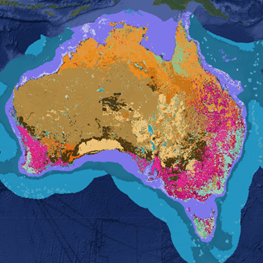
DCCEEW has updated the Environmental-Economic Accounts (EEA) Dashboard so users can access more data and analytical tools. The tool was developed by Environment Information Australia (EIA) and plumbs data sources including the ABS, the Water and Energy Accounts, and external administrative accounts. Data is also available for 10-12 year periods at a finer landscape scale. Access the tool here.
ABS Experimental Methodology: Identifying protective mangroves
I recently replicated the method used by the ABS National Ocean Account to identify protective coastal habitat and subsequently value it. Here, mangrove cover that is protective against storms and inundation is identified as sitting within 200m of the coastline and having a "belt-width" of at least 90m. Here, protective mangroves around Cairns Airport provide approximately $1.36 million in protective services annually.

Connect with Balmoral Group Australia Here


Comments