

Economic Perspective 21 August 2026
- 11 minutes ago
- 3 min read
The Latest Trending Economic News Curated for You by Balmoral Group Australia
Hello Dear Readers,
We want to share the success of our client Bourke Shire Council, who used a Strategic Business Case prepared by the Balmoral Group Australia to support a funding application for works on the historic North Bourke Bridge. The result: a successful $5 million grant! Congratulations to Council members and everyone else involved in the project. Pathways to the Past: Restoring North Bourke Bridge for Active Transport
Our favourite articles this week focused on agricultural supply chains. Nitrogen fertiliser prices are tied to gas prices due to industrial production methods, jacking up prices down the supply chain, but green hydrogen and renewables could sever this tie. The government is working on a new demand mechanism to increase the share of low-carbon liquid fuels entering the market, potentially using carbon-intensity standards or volumetric mandates, which will help to establish new revenue sources from agricultural residues. Major red meat processor JBS is trialing new technology along the supply chain, such as autonomous drones, objective grading systems, shadow robotics and robotic processing. Finally, the national Canola Allies project is researching the role and effect of beneficial insects in canola crops.
With food costs and supply chain pressures continue being topics of discussion, this week we included a visualisation of USDA's Economic Research Service "food dollar", which breaks down the sectoral origins of food price markups. This data offers useful context on how each dollar spent on food is distributed across the supply chain.
Please feel free to forward this to anyone you think would be interested. If you’d like to view previous editions, please click here and navigate the News tab, or to subscribe, please click here!
Happy reading and have a lovely weekend!


Fertiliser prices and shortages are hamstringing our farmers. But we have other options
Many crops and their derived products (e.g. wheat, canola, barley) rely heavily on nitrogen fertilisers for growth. These fertilisers are produced using the Haber-Bosch process, an industrial technique that combines atmospheric nitrogen with natural gas-derived hydrogen at high temperatures (again, powered by gas) to produce ammonia, to later become urea or ammonium nitrate fertilisers. Since this industrial process relies heavily on natural gas energy, fertiliser prices tend to follow gas prices, causing price volatility for producers which can trickle down the supply chain. This article suggests biofertilisers as a replacement, but a more likely alternative is using green hydrogen produced via water electrolysis, and powering plants with renewables supported by storage and grid balancing. Read more here.

Creating demand for low carbon liquid fuels
Low carbon liquid fuels (LCLF), such as sustainable aviation fuel (SAF), biodiesel, ethanol and renewable diesel, are a government priority. However, the LCLF industry has informed the government that supply-side support is not sufficient to attract investment at the needed scale without accompanying growth in demand. In response, the government is developing a demand mechanism, which may utilise volumetric mandates or carbon-intensity standards, to increase the proportion of LCLF entering the market. Read more here.
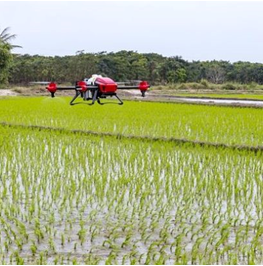
Tech driving efficiency across JBS Southern supply chains
JBS, Australia's largest meat processor, has been implementing new technologies across its supply chain. Autonomous drones fitted with speaker systems, spotlights, and thermal or visual cameras are being trialed in feedlots for cattle movement and health monitoring, site security, and hundreds of other use cases. Other technologies included shadow robotics, allowing workers to remotely operate robotic arms on a production line, MEQ Probe grading cameras to automate carcass grading, hook tracking, robotic processing, and more. Read more here.

Canola Allies: recruiting insects for natural pest control
The national Canola Allies project aims to attract and retain beneficial insects in canola crops. These beneficial insects can delay the need for insecticide sprays by hunting pests. New tools are being developed to quantify the contribution and economic value of beneficial insects in canola systems, including monitoring systems like pitfall traps, sweep nets, and sticky and funnel traps. Crucially, refuge vegetation nearby crops increases the number and activity of beneficial insects, and more research is being conducted in order to make crops more attractive to beneficials. Read more here.
US Food Price Breakdown by Industry
The US Department of Agriculture's (USDA) Economic Research Service has created the "Food Dollar", a series of price factor breakdowns showing, for every dollar of food, where costs derive from. Here we see that a large proportion of food prices are from "food services", i.e. the markup from preparation, followed by processing markups and retail markups.

Connect with Balmoral Group Australia Here


Comments