

Economic Perspective 24 April 2026
The Latest Trending Economic News Curated for You by Balmoral Group Australia
Hello Dear Readers,
This week, more on our favourite subject: green transitions in the context of finance and infrastructure. Blue loans, similar but distinct from green loans, have penetrated Australian financial markets at the Mundaring water treatment plant near Perth, which aligned its operations with the International Finance Corporation's (IFC) "Blue Finance Guidelines", and this week the ABS have released updated ecosystem accounts to support evidence-based decision making and finance. I've attached an interesting figure from the accounts below. Next, a discussion of the vulnerability of our wheat production systems to climate volatility, how breeding could circumvent externalities, and the revegetation of otherwise concrete tram and light rail tracks as a (relatively) simple remedy for urban heat, such as Parramatta's grassy light rail, which I personally adore.
Please feel free to forward this to anyone you think would be interested. If you’d like to view previous editions, please click here and navigate the News tab, or to subscribe, please click here!
Hope you enjoy the articles and have a lovely weekend!

Blue loan water finance lands at Mundaring plant
The $170.5 million refinancing of the Mundaring Water Treatment Plant, located east of Perth and supplying over 100,000 people in the WA Goldfield's region, can be categorised as a "blue loan". Green loans have been rising across infrastructure, but blue loans specifically target water assets, and require demonstrably measurable assurances; Mundaring secured second-party opinions by aligning with the IFC's "Blue Finance Guidelines" and broader green loan principles - allowing investment incentives to rely on measurable outcomes rather than narratives. The introduction of Australian blue loans reflect potential expansion of funding pathways and private capital attraction for the water sector. Read more here.

Measuring nature’s value for better environmental decisions
DCCEEW has worked with CSIRO and the ABS to develop Australia's 2nd national ecosystem account. The account puts a dollar value on certain services rendered by the environment unto our economy: carbon storage, fresh water, and marine fish. Findings show $864 million worth of surface water for household use, $59.5 billion in stored carbon in grasslands, forests, savannas and mangroves, along with other measurements of livestock feed, tidal surge protection and farmed fish. Such values support evidence-based decision making around the allocation and stewardship of natural resources. Read more here.

We eat a lot of wheat. So how can we grow more in a changing climate?
Wheat is produced by harvesting and processing the dry, edible seeds of a type of cultivated grass, producing food, animal feed, and industrial inputs such as biofuels. While AU produces 10-20% of global wheat exports, our growing regions are increasingly vulnerable to climate volatility, with recent modelling suggesting dryland growing regions could face yield drops of up to 20% in the 2030s. Furthermore, higher CO2 levels can deteriorate wheat protein content, contributing to "hidden hunger" whereby people are restricted to nutrient-poor staple foods. Potential solutions include breeding or engineering more adaptable crops, such as with the heat-resilience hormone strigolactone. Read more here.
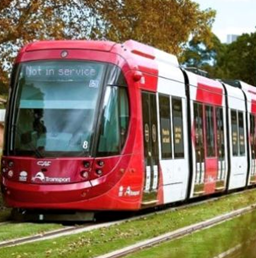
Green tram tracks cut heat and beautify cities. Why isn’t Australia doing it?
A simple solution to sweltering urban heat islands is vegetation, incorporating heat-absorbing foliage into otherwise concrete space. one such avenue, foliage-covered tram/light rail tracks, usually incorporates species of grass or sedum succulents (durable to the elements and constant vibration). Benefits include potential stormwater storage gains of 50-70% easing pressure on storm systems, lower air temperature of around 10°C in summer, ecological "corridors" which can help connect otherwise fragmented natural habitat, and obvious aesthetic benefits. Australia's best example of this is the Parramatta light rail, and these structures may become more frequent as the NSW lightrail network develops. Read more here.
National supply of water provisioning ecosystem services
This figure from the ABS national ecosystem accounts displays the proportion of Australia's surface water allocated to three industrial uses: drinking, materials, and energy. Tasmania dominated surface water for energy generation, accounting for 70.9% of national use in 2022-23, reflecting its reliance on hydroelectricity.

Connect with Balmoral Group Australia Here


Comments