

The Economic Perspective 12 June 2026
- 2 days ago
- 3 min read
The Latest Trending Economic News Curated for You by Balmoral Group Australia
Hello Dear Readers,
This week's articles focus on carbon projects and markets, both sustainable and unsustainable. Research has shown that farms are increasingly generating income from renewable energy hosting, environmental markets, and land access; these streams are not covered by modern tax terminology. Furthermore, the slowdown of Australian Carbon Credit Unit (ACCU) methodologies may be limiting implementation, despite overall success, with forests regrowing on 94% of eligible "human-induced regeneration" land. Additionally, a new report finds that the world's largest banks have upped financing for fossil projects, reflecting surging energy demand. Please check the figure in this edition illustrating the spatial distribution of Australia's regeneration projects.
Please feel free to forward this to anyone you think would be interested. If you’d like to view previous editions, please click here and navigate the News tab, or to subscribe, please click here!
Happy reading and have a lovely weekend!


Modern Farming is Outgrowing Australia's Tax System
New AgriFutures Australia research shows that farm businesses are increasingly generating income from renewable energy hosting, environmental markets, and land access agreements, activities sitting outside current tax definitions of primary production. This mismatch creates financial disadvantages when farmers face higher tax bills, lose access to concessions originally designed for sole traders, and incur additional compliance costs. The report recommends updating key definitions in tax law to reflect how modern farming actually operates. Read more here.

World's Largest Banks Increase Fossil Fuel Financing to $906 Billion
The Banking on Climate Chaos report reveals that the world's 65 largest banks committed $906 billion to fossil fuel companies in 2025, up nearly 8% from the prior year, reversing expectations of a gradual pullback. The financing is highly concentrated, with twelve banks accounting for roughly 40% of global fossil fuel financing, and nearly half of the funds may be directly supporting expansion of new infrastructure. The report reflects a broader paradox: surging energy demand from AI, data centres, and industrial growth is driving simultaneous investment in both fossil fuels and renewables. Read more here.

Carbon Farming: The Side of Net Zero Running Out of Friends
Australia's carbon market is facing growing political opposition, with both One Nation and the Coalition pledging to scrap the safeguard mechanism, which is the key policy maintaining demand for Australian Carbon Credit Units. Carbon market functions can become tied up in regulation and the government has cancelled or delayed several key methodologies for beef and soil. Meanwhile, a campaign called Growing Australia's Nature Economy is pushing back, highlighting that the market has paid out close to $800 million to farmers, landholders, and Indigenous communities. Read more here.
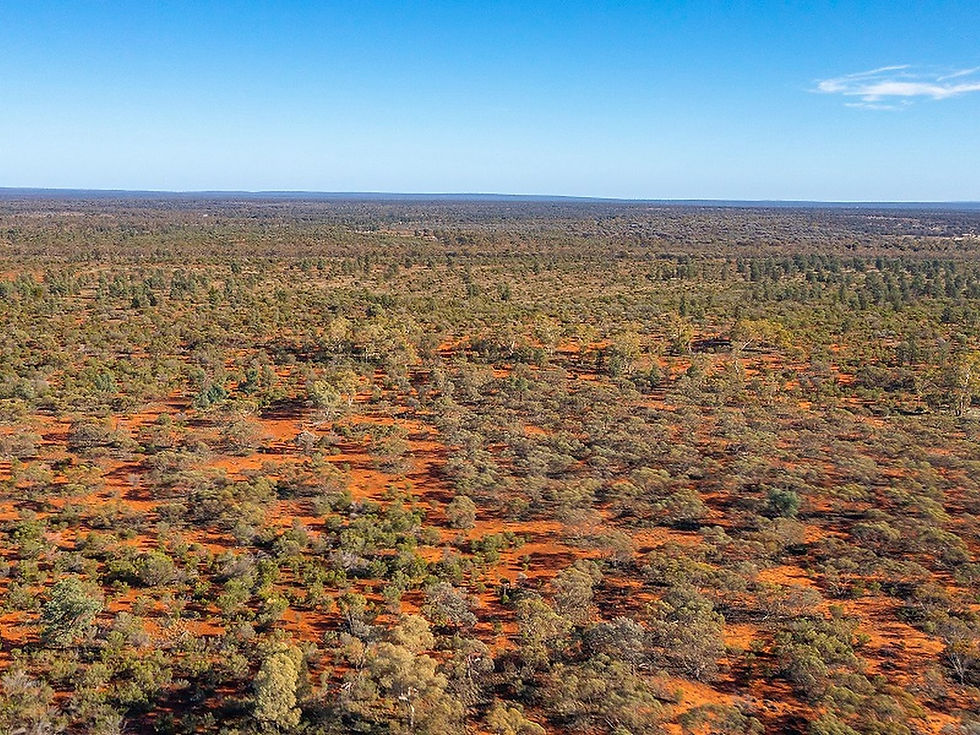
Are Australia's Carbon Farming Schemes Just Hot Air? – forests are regrowing almost everywhere
Australia's largest carbon farming scheme, human-induced regeneration, covers around 42 million hectares of land, with each tonne of carbon dioxide absorbed by regrowing trees earning one Australian Carbon Credit Unit worth roughly $37.50. While some critics questioned its effectiveness, an independent review of nearly 100 projects found that 94% of eligible land is seeing successful forest regrowth. Only 6% were excluded due to insufficient regeneration, and aerial data confirm the program is largely working as intended. Read more here.
Spatial Diffusion of Human Induced Regeneration Projects
The map below shows geographical locations of HIR projects registered between 2013 and 2022, based on data from the Clean Energy Regulator. Research has shown that spatial proximity to existing projects predicts landholder adoption, meaning projects tend to crawl along via word of mouth influence, potentially limiting land use efficiency. This results in spatial concentration, clearly visible in the map.

Connect with Balmoral Group Australia Here


Comments