

The Economic Perspective 15 May 2026
The Latest Trending Economic News Curated for You by Balmoral Group Australia
Hello Dear Readers,
With the new federal budget released, this week we're looking at trade policy and government-funded tech shifts. Academic perspectives from ANU's Crawford School of Public Policy and the Swinburne University of Technology explore the links between Australian and Japanese energy sectors and check through the new budget's progress towards transport electrification, respectively.
Meanwhile, local initiatives aim to enhance the circular economy, from Bega Valley's new organic waste processing site to machine learning-based drone analysis to detect plant stress. This week I have also included a figure visualising the estimates of the underlying cash balance, projected at a sound 1% GDP deficit.
Please feel free to forward this to anyone you think would be interested. If you’d like to view previous editions, please click here and navigate the News tab, or to subscribe, please click here!
Hope you enjoy the articles and have a lovely weekend!


Gas and coal have long tied Japan to Australia. It’s time for a new climate and green industry partnership
Last week the Prime Minister visited Japan, signing a joint declaration on economic security and policy alignment across trade, energy, critical minerals and new tech (e.g. quantum computing). Aussie-Japan relations are complex along several avenues. First, Japanese industry has been vocally opposed to calls for increased Australian gas export taxation, with Japanese ambassador Kazuhiro Suzuki naming the potential windfall tax a "bad surprise" for investors. This makes sense, given Japan's fragile energy security. Inversely, Australia has low oil reserves relative to Japan. While Japan could bolster our supply, they're concerned over recent LNG reservation "Safeguard mechanism" policies. Lastly, while both countries are electrifying and shifting to renewables, Japan places larger emphasis on gas in long term planning. This disparity may create discord in future policy and trade interactions. Read more here.
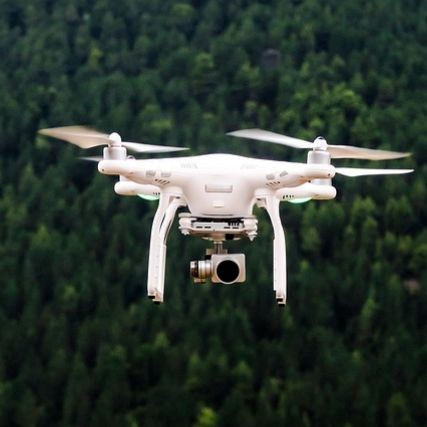
Ancient knowledge and modern science give early warning on plant stress
Nallawilli Bunjil, an Indigenous-led tech company, is using drones and data modelling to support environmental land management. The company collaborated with CSIRO to build a machine learning model capable of detecting and classifying vegetation from drone imaging data. Multiple sensors capturing colour, heat and structure feed into ML workflows to map vegetation distributions, and a follow-up project will develop a hyperspectral algorithm (capturing information across the EM spectrum to identify chemical composition) will detect early signs of plant stress and changing land health. Nallawilli Bunjil will apply the technology to environmental monitoring projects across Australia. Read more here.

Electric transport is no longer niche. This year's budget shows it's the future
The new federal budget continues the cautious and incremental shift towards electric transport. A $55 million pilot program aims to increase freight rail and shipping, accompanied by various upgrades to industrial and freight corridors and a whopping $3.8 billion for Melbourne's Suburban Rail Loop. Active transport projects (walking and cycling routes) also received a $500 million splash. However, the boost for EV charger networks and heavy vehicle electrification was small, as policymakers believe the EV market is maturing and additional incentives are unnecessary, despite the vital role of chargers in opening EV markets to renters and apartment residents. There was also no plan to replace fuel excise revenue as transport electrifies, likely due to the sensitivity around the most viable replacement: road user charges. Read more here.

Bega Valley Shire building a new organics facility
Bega Valley's FOGO collection service has expanded rapidly as more residents joined the service, causing collection to outpace processing capacity. The old site, originally a windrow compost facility with a 5,000 tonne limit, which was later upgraded to a low-cost aerated floor system due to increased demand, is again being upgraded to keep pace with rising organic waste output. To remove contamination risks caused by excess waste and liquid runoff (leachate), the new plant will increase processing capacity to 15,000 tonnes per year and aims to finish construction by 2027. Read more here.
Confidence intervals around the underlying cash balance forecasts
This figure from the new federal budget (Budget Paper 1, Statement 8) shows the confidence intervals around forecasts of the federal cash balance. We can be 90 percent sure that the cash figure in the 2026-27 budget will fall between a deficit of 3.8% and a surplus of 1.8% of GDP, while the expected balance sits at a deficit of 1.0% GDP. This level of government debt is reasonable, given that the economy will likely grow faster than the interest paid on government debt.

Connect with Balmoral Group Australia Here


Comments